



How to make Chemex coffee: step-by-step brewing guide
The Chemex makes one of the cleanest, most elegant cups of filter coffee. Here is exactly how to use one.
To make Chemex coffee step by step, place a thick, bonded paper filter in your brewer, rinse it with hot water, add 30 grams of medium-coarse coffee, and pour 500 grams of water between 185 and 205 degrees Fahrenheit in steady, circular motions over a total brew time of four to five minutes. This straightforward pour over method consistently delivers a crisp, bright cup with zero sediment.
What is a Chemex and why it produces such a clean cup
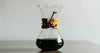
The Chemex is an iconic, hourglass-shaped pour over device made of non-porous borosilicate glass. Invented in 1941 by a chemist, it is celebrated for both its design and its capacity to yield an exceptionally crisp, sediment-free brew.
The secret to its clean flavor profile lies almost entirely in the specialized paper filters. According to Serious Eats, Chemex filters are 20 to 30 percent heavier than standard drip machine filters. This dense paper traps bitter oils, small coffee particles, and unwanted sediment, allowing only the pure, bright notes of the bean to pass through to the glass carafe below.
What you need
To get the best results, you should gather your equipment before you begin:
-
Chemex brewer: the classic six-cup version is standard for home kitchens.
-
Proprietary Chemex filters: Either circles or squares are fine, but if you’re using a paper filter, you do need the specific Chemex ones. Alternatively, metal filters like Able’s Kone are reusable, but don’t produce as clean a cup. We recommend bleached white filters over brown ones.
-
Fresh coffee: we recommend a light-to-medium roast. Browse our collection of coffees great for the Chemex.
-
Coffee grinder: you’ll need a burr grinder (or coffee ground on the coarser side of medium)
-
Digital scale and timer: these will help you brew consistently and adjust variables to make your next brew even better.
-
Gooseneck kettle: this is vital for maintaining a steady, controlled stream of hot water.
Step-by-step: brewing with a Chemex
This Chemex guide provides a foolproof sequence for a standard three-cup or four-cup yield.
-
Open and position the filter: unfold your Chemex filter so that three layers face the pouring spout and one layer faces the back of the brewer.
-
Rinse the paper: pour hot water through the empty filter to remove any residual paper taste and warm the glass carafe. Discard the rinse water through the spout without removing the filter.
-
Add your grounds: pour 30 grams of medium-coarse coffee into the filter and shake gently to level the bed. Place the entire setup onto your scale and reset it to zero.
-
The bloom: saturate the grounds with 60 grams of water heated to about 185 to 205 degrees. Let the bed sit undisturbed for 45 seconds to allow carbon dioxide gas to escape.
-
Continuous pours: pour water in gentle circles, avoiding the very edge where the paper meets the glass. Bring the scale weight up to 300 grams, let it drain slightly, and pour again until you hit a final weight of 500 grams.
-
Drain and serve: allow the liquid to drip completely through the bed. The total brew cycle should finish in under five minutes. Remove the filter, compost the grounds, and swirl the carafe to mix air with the finished coffee.
Grind size, dose, and water temperature for Chemex
To achieve a bright and balanced cup without any hollow or bitter flavors, you must adhere to correct technical specifications. According to the Chemex official brewing guide, adjusting your grind to match the target brew time is the most important variable.
-
Grind size: use a grind on the coarser side of medium. It should resemble coarse sea salt. If the water stalls and takes longer than five minutes to drain, make the grind more coarse on your next attempt.
-
Coffee-to-water ratio: a one-to-16.6 ratio is a solid baseline for this brewer. Using 30 grams of coffee to 500 grams of water creates a clean but intensely flavorful profile.
-
Water temperature: keep your water between 185 and 205 degrees. Lower temperatures within this window prevent over-extraction in medium roasts, while higher temperatures help unlock the fruit-forward notes in light roasts.

How Chemex compares to pour over and French press
Understanding how the Chemex compares to other popular brewing tools helps you determine if it fits your specific morning routine. As detailed in the Perfect Daily Grind, the filter paper for the Chemex is thicker than other brewers.
-
Chemex vs standard pour over: a Chemex is larger than most other pourover devices, making larger batches possible. The filter is also thicker, leading to longer draw down times.
-
Chemex vs French press: a French press is a full-immersion method that utilizes a metal screen, leaving oils and fine sediment inside the liquid. The Chemex is the exact opposite, exchanging that heavy texture for crisp flavor and lighter body.
The bottom line
Chemex produces one of the most refined filter coffee cups — bright, clean, and complex. Trade ships every bag roasted to order from independent roasters.
If you are ready to find your ideal single-origin match, take the taste quiz or our Chemex coffee collection to find roasters who prioritize ethical sourcing. If you are looking to update your kitchen setup with premium carafes and kettles, you can also browse brewers to explore our top equipment selections, all guaranteed to deliver within a five- to 21-day peak freshness window.
FAQS


